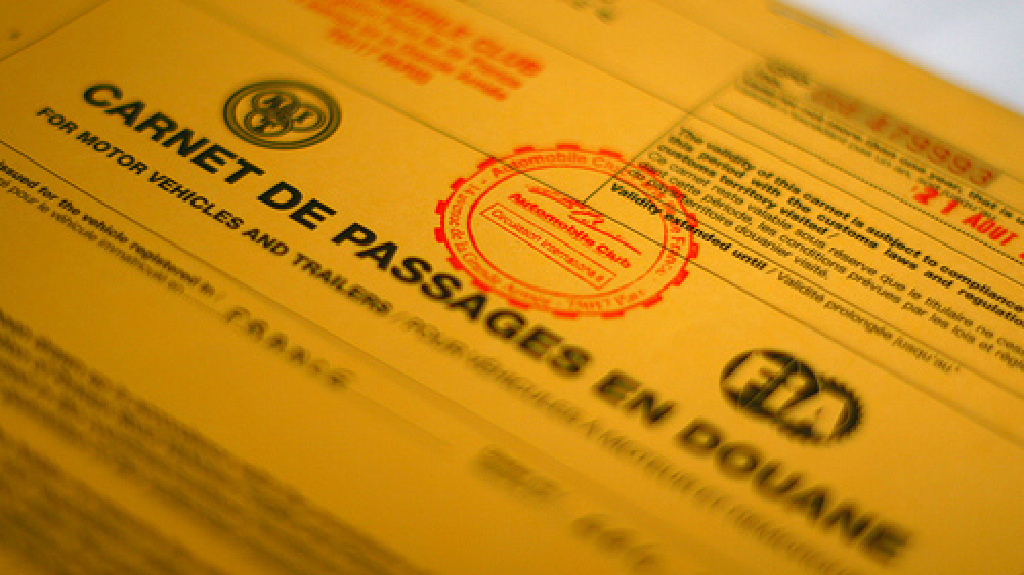
An ATA carnet is an international customs document that allows goods to be temporarily exported from the UK and re-imported without paying duties or import taxes in each country visited. The ATA carnet meaning is practical rather than theoretical: it provides a single, recognised document that replaces multiple import and export declarations for temporary movements. An ATA carnet is commonly used for professional equipment, commercial samples, and exhibition goods, and when applied correctly, an ata carnet shipment simplifies border formalities and reduces administrative friction during carnet shipment movements.
Before travel, exporters must complete an ata carnet application, also referred to as a carnet application, which sets out the goods, their value, and the countries to be visited. The ata carnet price, or cost of ata carnet, is based on factors such as the value of the goods and the number of destinations. During transit, the carnet must be presented at each border, where ata carnet customs checks record the temporary export and re-import of the goods. CustomsCloud supports ATA carnet movements by helping businesses manage carnet documentation, track usage, and retain clear records, reducing the risk of errors or non-compliance during international travel.
For UK trade, an ATA carnet allows goods to move temporarily across borders without paying import duties or taxes in each country visited. Once issued, the ata carnet is used as a single customs document for the full journey, covering export from the UK, temporary import into foreign countries, and re-import back into the UK. This is the practical ata carnet meaning in trade terms: replacing multiple customs entries with one controlled document for a compliant ata carnet shipment or carnet shipment.
Before goods travel, the trader must complete an ata carnet application, also known as a carnet application, detailing the goods, values, and destinations. The ata carnet price, or cost of ata carnet, is linked to the value of the goods and the countries involved. At each border, customs officers apply ata carnet customs controls by stamping the carnet to confirm movement in or out of the country. CustomsCloud supports UK traders using ATA carnets by providing structured record-keeping, document visibility, and audit support, helping businesses manage carnet movements correctly and avoid compliance issues during international trade.
Most problems with an ATA carnet arise from incorrect use at the border rather than from the document itself. Common errors include missing customs stamps, presenting the carnet to the wrong customs authority, or failing to complete the correct counterfoil on entry or exit. When this happens, an ata carnet shipment or carnet shipment may be treated as a permanent import, exposing the holder to duties, taxes, or penalties. These risks often stem from misunderstandings of ata carnet customs procedures, rather than intentional non-compliance.
Administrative mistakes can also create exposure. Errors made during an ata carnet application or carnet application, such as inaccurate goods descriptions or values, can affect the ata carnet price and increase liability if the carnet is challenged. The cost of ata carnet issues can escalate quickly if goods are not correctly re-exported or returned within the carnet’s validity. CustomsCloud helps reduce these risks by supporting structured record-keeping, tracking carnet usage, and retaining clear audit records, giving UK traders better control and visibility over how their ATA carnet is used throughout its lifecycle.
Use Cases (Exhibitions, Tools, Equipment) & Why Use an ATA Carnet Specialist
ATA carnets are commonly used when goods are moved temporarily for exhibitions, tools of trade, or professional equipment. Typical examples include exhibition stands, demonstration units, specialist tools, broadcast equipment, or technical instruments that need to return to the UK after use. In these situations, an ATA carnet allows the goods to move as an ata carnet shipment or carnet shipment without paying import duties or taxes in each country visited. This is the practical ata carnet meaning for temporary trade movements: controlled international travel without permanent import formalities.
Using an ATA carnet correctly requires careful preparation and handling. An ata carnet application, also known as a carnet application, must accurately describe the goods, values, and destinations, as this affects both acceptance at the border and the ata carnet price or cost of ata carnet. During travel, ata carnet customs procedures must be followed precisely to avoid penalties or duty exposure. Many businesses therefore use an ATA carnet specialist to manage the process and reduce risk. CustomsCloud supports this by providing structured record-keeping, visibility of carnet movements, and retained documentation, helping businesses manage ATA carnet use confidently and compliantly across exhibitions, tools, and equipment movements.
Typical Documentation Requirements
This section provides general guidance on commonly required import and export documentation and does not constitute legal advice. Requirements may change, and no liability is accepted for errors or omissions.
ATA Carnet: An ATA Carnet is an international customs document that allows goods to be temporarily moved between countries without paying import duties or taxes. It is commonly used for exhibitions, professional equipment, and commercial samples.
General List: The general list forms part of the ATA Carnet and provides a detailed inventory of the goods covered, including descriptions, quantities, and identifying marks. It is used to verify the goods at each border crossing.
Goods Description and Identification Details: Clear descriptions and identification details are required to distinguish the goods covered by the carnet, such as serial numbers, model references, or unique markings. This helps ensure the correct items are presented on entry and re-export.
Authorisation or Power of Attorney: An authorisation or power of attorney may be required to allow a third party to manage the carnet process on behalf of the holder. This confirms who is permitted to act in relation to the carnet.
Transport Documentation: Transport documents confirm how the goods are being moved and support the temporary movement covered by the carnet. These documents help link the carnet to the physical movement of the goods.
Additional Supporting Documentation: Depending on the type of goods and destination countries, further documentation may be required to support the use and control of the ATA Carnet.
Frequently Asked Questions – General Guidance
These FAQs provide general guidance only and do not constitute legal advice. Requirements may vary by shipment, location, and regulation.
What is an ATA Carnet and when do I need one? An ATA Carnet is an international customs document that allows goods to be temporarily exported and re-imported without paying import duties or VAT. It is commonly used for exhibitions, trade shows, professional equipment, and commercial samples. Tools such as CustomsCloud help identify when a carnet is the correct procedure and ensure the movement is recorded correctly.
What types of goods can be moved using an ATA Carnet? Goods typically covered by an ATA Carnet include exhibition materials, tools of trade, professional equipment, and commercial samples. Consumable items, perishable goods, and items intended for sale are generally not permitted. CustomsCloud helps businesses check eligibility early, reducing the risk of using a carnet where it is not appropriate.
How long is an ATA Carnet valid for? An ATA Carnet is normally valid for up to 12 months from the date of issue. During this period, the goods must be re-exported and returned to the UK within the carnet’s validity. CustomsCloud helps track carnet usage and key dates, supporting compliance and reducing the risk of overstaying.
What happens if goods are not re-exported on time? If goods are not re-exported within the carnet’s validity, customs authorities may demand payment of duties, VAT, penalties, or fines in the country where the goods remain. Accurate record-keeping is essential. CustomsCloud supports document control and audit trails, making it easier to evidence movements and respond to customs enquiries.
What information is needed to apply for an ATA Carnet? Applying for an ATA Carnet requires detailed information about the goods, including descriptions, serial numbers, values, countries to be visited, and intended use. Incomplete or inaccurate information can cause delays or rejection. CustomsCloud helps organise and validate this information before submission, reducing errors and speeding up the application process.
ATA Carnet – Contact Us
Temporary movements of goods often require a carnet rather than a full import or export declaration. Our ATA Carnet services assist with the preparation and management of carnet documentation to support short-term movements such as exhibitions, professional equipment, and commercial samples. For guidance on carnet requirements or to submit a request through a registered CustomsCloud account, contact our team on +44 208 754 9000 or email admin@customscloud.com
All quotations and estimates are indicative and may be adjusted based on final shipment details where applicable. Customers must hold an active, registered CustomsCloud account to submit requests and access services. It is the customer’s responsibility to ensure that all information provided is accurate, complete, and compliant with applicable regulations. Prices are reviewed periodically and may change without notice.
All services are provided in accordance with the British International Freight Association (BIFA) Standard Trading Conditions (latest edition), which are available upon request.”